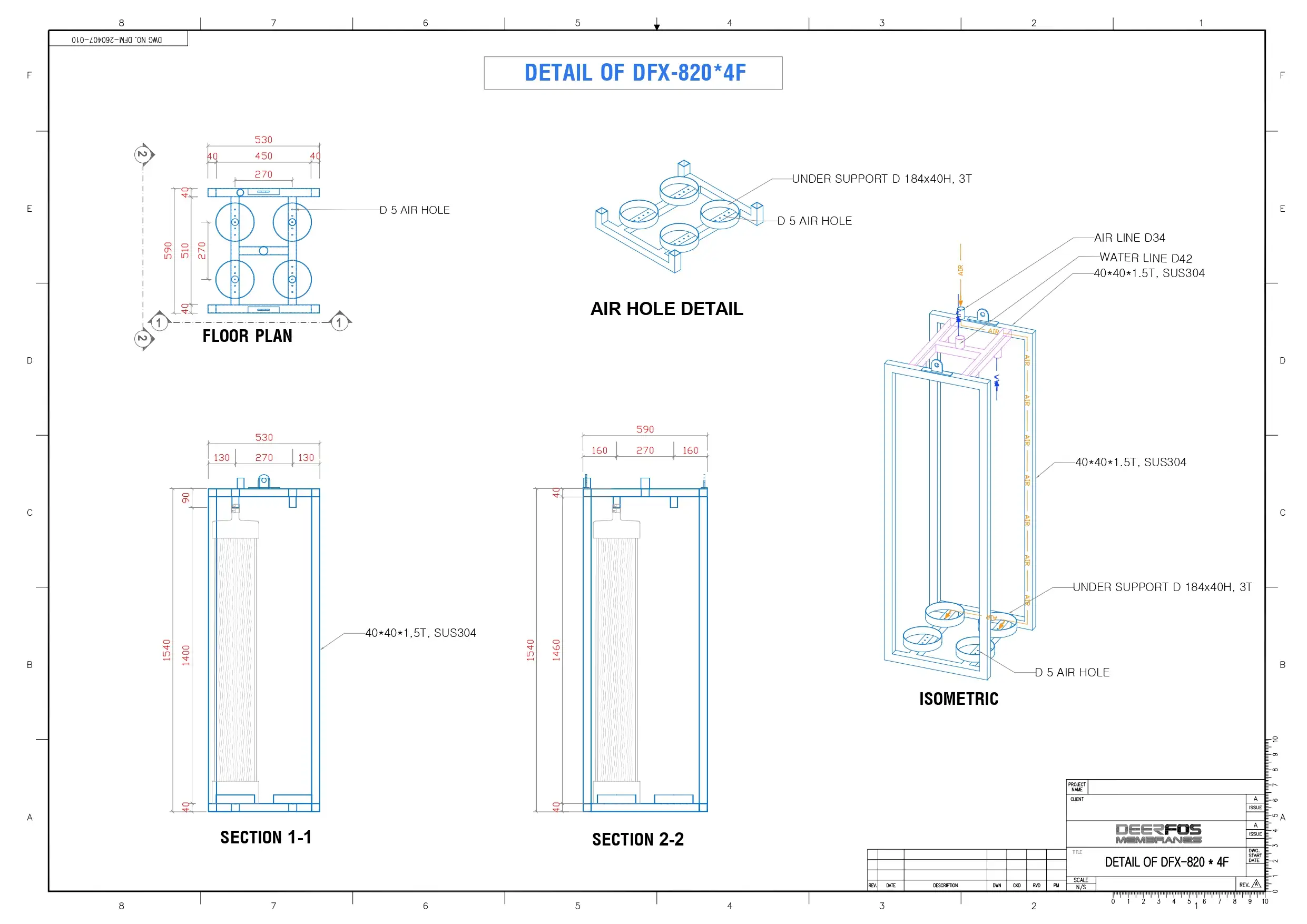


SOP VẬN HÀNH HỆ THỐNG MBR
STANDARD OPERATING PROCEDURE – MBR SYSTEM
1. MỤC ĐÍCH | PURPOSE
Đảm bảo hệ thống MBR vận hành ổn định, đạt tiêu chuẩn xả thải và kéo dài tuổi thọ màng.
Ensure stable MBR operation, compliant effluent quality, and extended membrane lifespan.
2. PHẠM VI ÁP DỤNG | SCOPE
Áp dụng cho tất cả hệ thống xử lý nước thải sử dụng công nghệ MBR.
Applicable to all wastewater treatment systems using MBR technology.
3. THÔNG SỐ VẬN HÀNH CHÍNH | KEY OPERATING PARAMETERS
|
Thông số (VI) |
Parameter (EN) |
Giá trị khuyến nghị |
|
MLSS |
MLSS |
5,000 – 12,000 mg/L |
|
Áp suất TMP |
Transmembrane Pressure |
0.05 – 0.4 bar |
|
Tải lọc |
Flux |
0.2 – 0.8 m³/m².day |
|
Chu kỳ hút |
Suction cycle |
7–12 min ON / 1–3 min OFF |
|
Sục khí |
Aeration rate |
6–8 m³/h/module |
|
DO |
Dissolved Oxygen |
≥ 2 mg/L |
4. QUY TRÌNH VẬN HÀNH | OPERATION PROCEDURE
Bước 1: Khởi động | Step 1: Start-up
- Kiểm tra thiết bị (bơm, blower, van, cảm biến)
- Ensure all equipment (pump, blower, valves, sensors) are operational
- Đảm bảo MLSS ≥ 3,000 mg/L
- Ensure MLSS ≥ 3,000 mg/L
- Khởi động sục khí trước khi hút
- Start aeration before suction
Bước 2: Vận hành bình thường | Step 2: Normal Operation
- Duy trì MLSS, DO, TMP trong giới hạn
- Maintain MLSS, DO, TMP within limits
- Vận hành hút gián đoạn
- Operate intermittent suction mode
- Theo dõi lưu lượng và chất lượng nước
- Monitor flowrate and effluent quality
Bước 3: Kiểm soát fouling | Step 3: Fouling Control
- Theo dõi TMP hàng ngày
- Monitor TMP daily
- TMP tăng → thực hiện cleaning
- If TMP increases → perform cleaning
- Đảm bảo sục khí đều
- Ensure uniform aeration
Bước 4: Vệ sinh màng | Step 4: Membrane Cleaning
- Hàng tuần: NaOCl 500–1000 mg/L
- Weekly: NaOCl 500–1000 mg/L
- Định kỳ: NaOCl ~3000 mg/L
- Periodic: NaOCl ~3000 mg/L
- Fouling nặng: rửa acid / soaking
- Severe fouling: acid or soaking cleaning
5. KIỂM SOÁT NƯỚC ĐẦU VÀO | INFLUENT CONTROL
- Dầu mỡ ≤ 50 mg/L | Oil & grease ≤ 50 mg/L
- Không dùng silicon antifoam | No silicone antifoam
- Hạn chế surfactant | Limit surfactants
6. AN TOÀN & LƯU Ý | SAFETY & PRECAUTIONS
- Không để màng khô sau vận hành
- Do not allow membranes to dry after use
- Tránh sốc tải
- Avoid shock loading
- Theo dõi TMP liên tục
- Monitor TMP continuously
7. XỬ LÝ SỰ CỐ | TROUBLESHOOTING
|
Hiện tượng (VI) |
Issue (EN) |
Giải pháp (Solution) |
|
TMP tăng |
High TMP |
Cleaning |
|
Lưu lượng giảm |
Low flux |
Check fouling |
|
Bọt nhiều |
Foaming |
Control chemicals |
|
Không hút |
No suction |
Remove air lock |
CHECKLIST VẬN HÀNH MBR/ MBR OPERATION CHECKLIST
1. HÀNG NGÀY | DAILY CHECK
|
STT |
Nội dung (VI) |
Item (EN) |
OK |
|
1 |
Lưu lượng đầu vào ổn định |
Influent flow stable |
☐ |
|
2 |
MLSS đạt 5,000–12,000 mg/L |
MLSS within range |
☐ |
|
3 |
DO ≥ 2 mg/L |
DO ≥ 2 mg/L |
☐ |
|
4 |
Không có dầu mỡ |
No oil & grease |
☐ |
|
5 |
TMP ≤ 0.4 bar |
TMP ≤ 0.4 bar |
☐ |
|
6 |
Lưu lượng permeate ổn định |
Stable permeate flow |
☐ |
|
7 |
Sục khí đều |
Uniform aeration |
☐ |
|
8 |
Bơm hút hoạt động tốt |
Suction pump normal |
☐ |
|
9 |
Không rò rỉ |
No leakage |
☐ |
2. HÀNG TUẦN | WEEKLY CHECK
|
STT |
Nội dung (VI) |
Item (EN) |
OK |
|
1 |
Vệ sinh NaOCl |
NaOCl cleaning |
☐ |
|
2 |
Kiểm tra MLSS/độ nhớt |
Check MLSS/viscosity |
☐ |
|
3 |
Kiểm tra blower |
Check blower |
☐ |
|
4 |
Kiểm tra bơm hút |
Check suction pump |
☐ |
|
5 |
Kiểm tra sensor |
Check sensors |
☐ |
3. ĐỊNH KỲ | PERIODIC CHECK
|
Chu kỳ |
Nội dung (VI) |
Item (EN) |
|
3 tháng |
Cleaning phục hồi |
Recovery cleaning |
|
Khi TMP tăng |
Rửa ngay |
Immediate cleaning |
|
6–12 tháng |
Rửa ngâm |
Soaking cleaning |
4. CẢNH BÁO NHANH | QUICK WARNINGS ⚠️
- TMP tăng nhanh → fouling / Rapid TMP increase → fouling
- MLSS cao → giảm hiệu quả rửa khí / High MLSS → poor aeration cleaning
- Không có chu kỳ nghỉ → tắc màng / No relaxation → clogging
- Dầu mỡ cao → hỏng màng / High oil & grease → membrane damage